Case study — Product development
Building a character range to a price point
A pet-toy brand owner arrived with finished character artwork and a landed cost already fixed by the shelf price they intended to sell at. The artwork described a toy that could be built — but not at that number. This is how the design was rebuilt around the constraint without losing the character, and what the buyer kept as a result.
The constraint
The price point was the brief
Most development projects start with a product and discover a price. This one ran the other way: the shelf price was already set, the retail margin was already agreed, and the landed cost was whatever was left. Everything downstream — panel count, surface detail, colourways, packaging — had to fit inside a number that could not move.
That is an unusual way to brief a development project and, for this buyer, the correct one. A character range that cannot be sold at its intended price is not a range, however well it samples. The useful question was never "can this be built" but "can this be built, in this material, at this cost, in a version the artwork still survives".
Commercial terms, the buyer's identity and the exact shelf price are withheld. The specification decisions below are the substance of the project and are described in the terms we would use with any buyer.
What arrived
Artwork written for a different construction
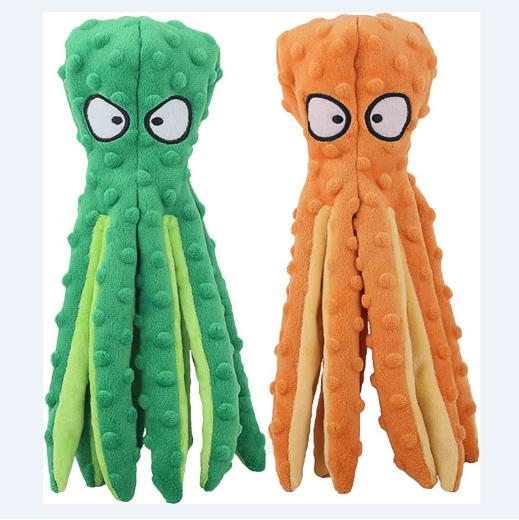
The character artwork was complete and consistent, which is rarer than it sounds and saved a great deal of time. The difficulty was that it had been drawn to look right, not to be sewn.
Detail expressed as separate pieces
Eyes, nose, markings and limb shading were drawn as distinct shapes, which reads naturally on paper and implies each one being cut and sewn on as its own panel. Applied pieces are the most expensive way to put detail onto a soft toy: each one is a cut, a placement and a seam.
A silhouette that needed volume
The proportions relied on the toy being full and rounded, which is a fill decision as much as a pattern decision. Getting the silhouette without the fill weight would have meant either a heavier fill than the price allowed or a body that looked deflated next to the artwork.
A range implied, not specified
The artwork covered several characters, and the buyer's plan was to launch them together. Launching a range is a different cost problem from launching one product, because every setup is multiplied by however many characters ship at once.
The decisions
Five substitutions that brought the cost to the artwork
Each of these changes how the toy is made rather than what it depicts. Read together they are the difference between a design that could be produced and a design that could be produced at the price.
| Element | As drawn | As built | What it preserved |
|---|---|---|---|
| Surface detail | Markings, shading and small features as separate applied pieces. | Printed fabric for the surface pattern, with applied pieces kept only where the shape genuinely required relief. | The character reads the same on a shelf. Print costs a setup, not a seam per unit. |
| Panel count | A multi-panel body following the contour of the drawing. | A reduced panel set with the silhouette carried by fewer, larger pieces. | The outline of the character. Panel count is the number that most directly divides the unit cost. |
| Features | Plastic eyes and a stitched nose assembly. | Embroidered features, in-house, at the same placement as the artwork. | The expression, and the removal of the components most likely to come away under play. |
| Fill | A full, rounded volume implied by the proportions. | Fill weight set and recorded per size so the silhouette holds at the lower end of the range. | The proportions as drawn, without overfilling the smaller sizes to get there. |
| Colourways | The full character set imagined as a launch range. | One colourway per character in the first order, on a shared packaging format. | The whole character set as a range, at a fraction of the setup cost of launching in multiple colourways. |
The one substitution we would not make is the one that changes what the product is. Where a printed surface would have lost the character, the detail stayed applied and the saving was found elsewhere — usually in the panel count or the colourway count. Cost is a constraint on the design, not a licence to make a worse product.
Sampling
Where the project actually spent its rounds
The shape was settled quickly. The revisions went into the two things that only exist physically: how the print sits on a curved body, and whether the reduced panel set still holds the silhouette when it is full.
-
ROUND 01
Soft sample from the artwork
Built to the drawing as closely as the pattern allowed, so both sides could see what the design was asking for. The point of this round was not to be approved — it was to make the discussion concrete.
-
ROUND 02
Print registration and panel reduction
The surface pattern was tested on the actual shell fabric, because print position shifts when a flat pattern is wrapped into a rounded body. The reduced panel set was cut at the same time, so both changes were reviewed on one sample.
-
ROUND 03
Fill and silhouette check
Fill weight was set per size and the whole size run was compared side by side, which is the only way to catch a range where one size reads heavier than the others.
-
PRODUCTION SAMPLE
Signed, with the sheet
The production sample was made on the line and issued with a specification sheet recording fabric, print position, panel structure, fill weight per size, embroidery placement and packaging format.
What the buyer kept
The outcome is a document, not just a sample
The obvious deliverable was a range that could be ordered at its intended price. The more durable one was the record of how it was costed, because it is what makes the next addition to the range predictable.
A costed panel structure
The panel set is documented as a structure rather than as a drawing, so a new character added later can be built to the same logic. The second character costs what the first one cost, instead of starting a new costing conversation.
Fill weight recorded per size
The one number that decides whether a size run reads as one product family. Written down, it repeats; remembered, it drifts.
One packaging format across the range
Decided at the same time as the product rather than after it, which is what kept the launch date from moving and made the characters read as a set on shelf.
Embroidered features as standard
A change made for cost that also removed the components most likely to fail in play. Not every cost decision has to be a trade against quality — this one was both.
Does this resemble your project?
Where to go next
This project is a development project with a fixed price point. Three other pages cover the parts of it that apply more widely.
How development is priced and staged
The three kinds of sample, the stages from brief to bulk, and what drives the number of revision rounds a project needs.
Writing the brief that starts it
Including where a price point belongs in a brief, and what an open field costs at each stage.
Buying under your own brand
Character and range development under your own brand, and how the programme repeats on reorder.
Send the price point and the artwork
You will get back a written note on what the design implies for the construction, which elements have to change to reach the number, and which ones can stay. Related: all case studies and the OEM and ODM overview.