Private label pet toys
Private label pet toys under your own brand
Existing constructions from our range, carrying your branding, your packaging and your SKU codes. No pattern development and no tooling — the product is already proven, and the work sits in the presentation. This page covers what can be branded, how the arrangement works, and what actually moves the minimum order quantity and the sampling date.
What it is
Private label, and what it is not
Private label is the shortest route from a catalogue to your own branded product, and it is the one most often confused with full custom development. The difference is where the design comes from.
Private label
You select a construction already in production. Your brand goes onto the product and the packaging, your SKU codes go onto the carton, and the first sample is a presentation sample rather than a development round. Nothing is designed and nothing is tooled.
ODM adaptation
You start from a construction we develop and change named elements — colourway, fabric, size, trim, sound device, shape details. There is pattern work, so there is at least one revision round.
OEM build
You supply the design. We develop the pattern, sample it, revise it with you, and produce to a signed sample. This is the longest route and the only one that produces a shape nobody else carries.
The three routes are not exclusive. Most ranges we quote use private label for the volume lines and one of the other two for a hero product. The OEM and ODM overview sets out all three side by side.
What can be branded
Every place your brand can appear
On a private label order the branding is the product. The table lists where it can go, what each route needs from you, and — the part that matters — how late it can be decided before it costs you a second sample or a missed print slot.
| Route | Where it goes | What we need from you | When it must be decided |
|---|---|---|---|
| Embroidered logo | Directly into the fabric of the body or a feature. | Vector artwork, or a stitch file if you already have one, plus the finished width. | At sampling. Stitch density and placement change how the logo reads on a curved shape and on a pile fabric. |
| Woven label | A sewn-in label at a seam, or a folded label on the outside. | Artwork, label dimensions and wording, including any care and origin text. | Before bulk. The label is a woven item with its own production, so a late change is a late order. |
| Printed hang tag | Attached to the product, carrying your brand and any required information. | Print-ready artwork, tag size and stock, and the attachment method. | With the packaging, not after the toy. A tag is a separate print job. |
| Header card | The retail presentation the product hangs on. | Print-ready artwork, card size and finish, the hanging hole, and any barcode or regulatory text. | Alongside the product sample. Approving packaging after the toy is finished is the most common cause of a missed retail date. |
| Moulded logo | Into the tool of a moulded chew or interactive part. | Artwork, and a decision on whether the logo is raised or recessed. | Before the tool is cut. A moulded logo cannot be added to an existing tool without a tool change. |
| Carton and shipping marks | The outer carton: your SKU codes, quantities, destination and handling marks. | SKU codes, carton configuration and any retailer-specific mark requirements. | Before the packaging print run. A wrong carton mark stops goods moving even when the product is correct. |
MOQ and sampling
What actually moves the minimum
We do not publish a blanket minimum order quantity, because a number that is right for one line is wrong for the next. What we can do is tell you exactly which decisions move it, so you can see the trade-off before you commit rather than after.
| Factor | Why it moves the minimum | How it is reduced |
|---|---|---|
| Colourway count | Every colourway is a separate fabric or print run, and each run has its own setup. | Fewer colourways per SKU, or one colourway carrying several sizes. Colour count is the single largest lever on a first order. |
| Fabric and pile | A fabric held in stock has one minimum; a fabric milled to your specification has the mill's. | Specify from fabrics already held, which is the normal starting point for a private label line. |
| Size splits | The minimum is quoted per construction and per size, not as one figure for the whole order. | Concentrate the volume in fewer sizes on the first run and widen the size range on reorder. |
| Packaging format | A header card, a gift box and a multi-pack are three different print and assembly operations. | Start with one packaging format across the range. A single standard is also what makes the range read as a range on shelf. |
| Branding method | An embroidered logo and a woven label are separate production steps with separate minimums. | Use one branding method across the range where the design allows, and add the others on a later run. |
| Tooling | A moulded part needs a tool, and the tool has to be paid for across the first order. | Choose a moulded construction already in the range rather than a new silhouette. This is the difference between private label and a moulded OEM build. |
Presentation sample
An existing construction made up with your branding and packaging. This is the sample a private label order produces, and its purpose is to show you what you are buying, not to develop anything.
What it proves
That the construction, the branding placement, the colours and the packaging are what you expected — which on a private label order is the whole list, because nothing about the product is new.
What it does not prove
It does not test a new shape, because there is no new shape. If your brief needs a construction that does not exist yet, that is an ODM or OEM order and the sampling and development route applies instead.
How the arrangement works
Five steps from selection to reorder
A private label programme is mostly an administration job done well. The steps below are the ones that decide whether the second order repeats the first exactly.
-
STEP 01
Select constructions
You choose the products and the size run from the current catalogue. Because nothing is developed, this step can be done entirely from photographs and dimensions.
-
STEP 02
Fix the branding
Which route on each product, where it sits and how big it is. Artwork is checked for what will actually reproduce on a pile fabric or in a stitch file before anything is sampled.
-
STEP 03
Settle one packaging standard
One card format, one label position, one carton configuration across the range, with your SKU codes mapped to it. This is the step that makes a set of products read as a brand.
-
STEP 04
Approve the presentation sample
The sample arrives branded and packed. Approving the product and the packaging together is what keeps the print job on the same schedule as the toy.
-
STEP 05
First run, then reorder
The approved sample and its specification sheet govern bulk. A reorder runs against that sheet, so the second order repeats the first rather than reinterpreting it.
Building this into a multi-SKU programme — packaging standards across a range, barcode and label obligations, replenishment cycles — is covered on the private label buyer page, which is written for that job rather than this one.
Typical starting points
Constructions that carry branding well
Any construction in the range can be private labelled. These four are the ones buyers most often start with, because each has an obvious place for a brand to sit and a shape that survives a printed design.
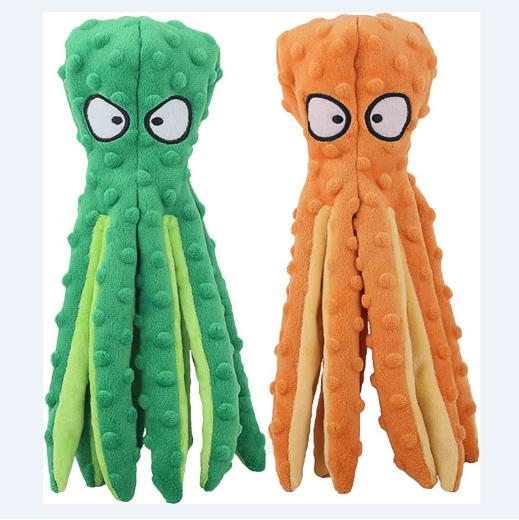
Printed plush
A large uninterrupted surface takes a printed design, and the legs give an embroidered logo somewhere flat to sit.
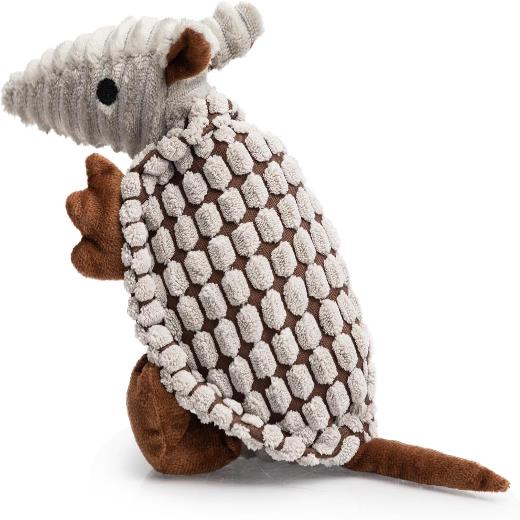
Segmented plush
The shell segments break the shape into panels, which is useful when a design has to sit on one panel rather than across a curve.
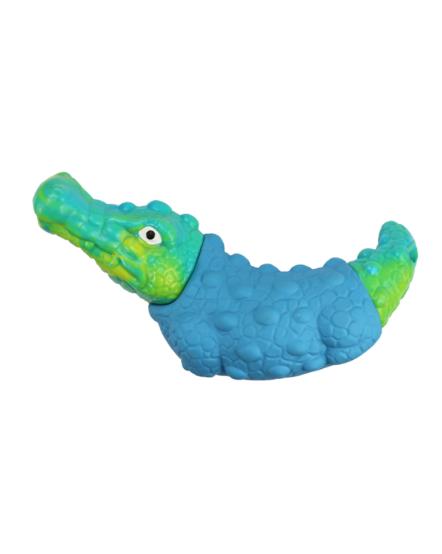
Moulded chew
Colour is moulded rather than applied, so a house colourway is possible without print. A moulded logo has to be in the tool from the start.
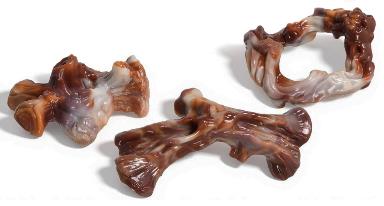
Shape families
One material, several silhouettes, one packaging standard. The cheapest way to fill a shelf with a coherent branded set.
Products are shown as they are produced, unbranded. Your branding is applied at sampling, and the sample you approve is the one that governs bulk.
What buyers ask about this arrangement
Quote a private label line from the catalogue
Send the constructions, the size run, the quantity split, the branding placement and the packaging format. You will get the applicable minimum order quantity per SKU, the sampling date and the compliance file set in the same reply. Related reading: running a private label programme and the buying guides.