Inside the factory
How the toys are made and how they are checked
Production runs through cutting, sewing, filling, finishing and packing, with inspection at four points and a needle and metal detection pass before packing. This page sets out what happens at each stage and what the shipment carries when it leaves.
Production
What happens between the sample and the carton
Soft-toy production is a sequence of hand and machine operations where quality is decided by how tightly each stage is controlled, not by how fast the line runs. These are the stages an order passes through.
Material preparation and cutting
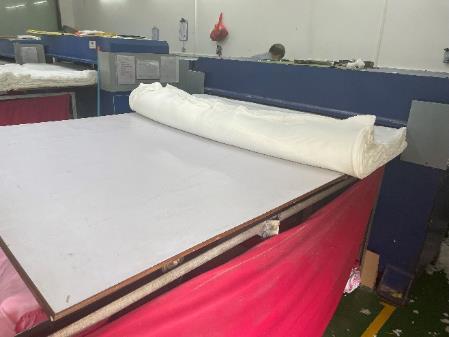
Fabric is inspected on receipt and laid up for cutting against the pattern. Panel sets are cut, matched by shade and direction, and bundled by size so that panels from the same dye lot stay together through the line.
Sewing and assembly
Panels are joined, features attached and the body assembled inside out before turning. Stress points receive the reinforcement defined on the specification sheet, which is where a soft toy either survives play or does not.
Filling and sound devices
Toys are filled to the specified density and weight, and squeakers or sound devices are fitted at the documented position and orientation. Filling density is what determines whether a toy holds its shape or deflates into a shell.
Finishing and detailing
Eyes, noses, trim, embroidery and printed detail are applied, and the toy is brushed and trimmed. Loose threads, visible seams and stitch density are checked by hand at this stage rather than at the end of the line.
Detection and inspection
Every unit passes needle and metal detection before packing, followed by a pre-shipment inspection against the signed sample and the AQL sampling plan agreed for the order.
Packing and cartoning
Products are packed to the approved format, labelled and barcoded, then cartoned with the marks and warning text the destination market requires. Cartons are weighed and measured before loading.
Quality control
The inspection chain: IQC, IPQC, FQC, OQC
Four inspection points, each with a defined scope and a defined outcome. A failure at any point stops the batch rather than moving it forward for someone else to catch.
-
IQC — INCOMING
Incoming quality control
Fabric, filling, thread, trim, sound devices and packaging materials are checked on arrival: shade and hand against the approved standard, weight and pile height, and the supplier's own documentation. Material that does not match the standard does not enter production.
-
IPQC — IN PROCESS
In-process quality control
Inspectors work on the line rather than at the end of it. Cut panel dimensions, seam integrity, stitch density, filling weight, sound device placement and reinforcement at stress points are checked at defined intervals against the signed sample.
-
FQC — FINAL
Final quality control
Finished units are inspected as complete products: appearance, symmetry, feel, sound function, trim attachment and freedom from loose parts. Defects are classified and the batch is dispositioned before it reaches packing.
-
OQC — OUTGOING
Outgoing quality control
Packed cartons are checked against the order: product code, quantity per carton, packaging format, labels, barcodes and carton marks. This is the last point at which a labelling error can be caught before the container is loaded.
-
DETECTION
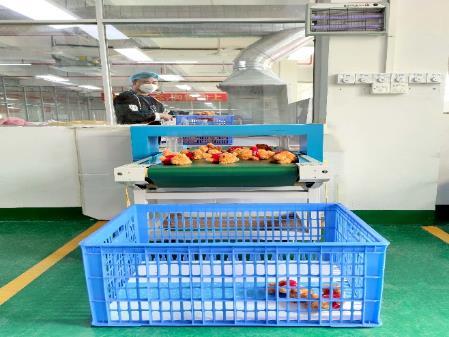
Needle and metal detection
Every unit passes through needle and metal detection before packing. In a soft-toy factory this is the control that matters most, because broken needles and stray metal fragments are the failure mode that no visual inspection reliably catches.
Inspection records are held against the order. If your retail channel or marketplace requires an inspection report from a third party, that is arranged separately — tell us the requirement and we will state it on the quotation.
On site
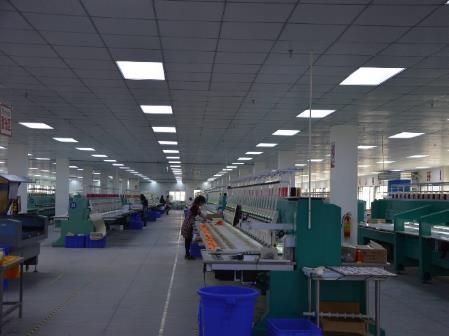
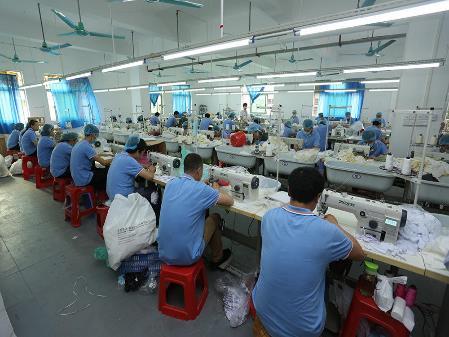
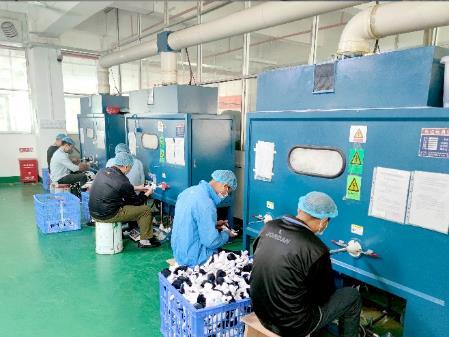
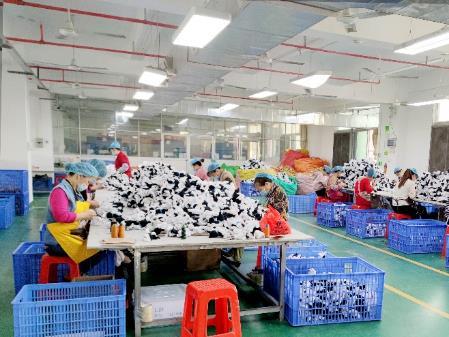
The areas a pet toy passes through
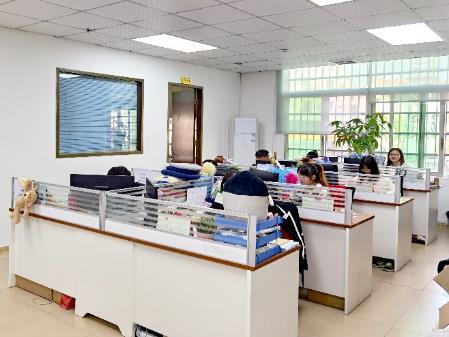
Production is organised into separate areas rather than one open floor, so that a problem found at inspection can be traced back to the operation that produced it. These are the areas on our site.
Compliance through production
Where the certificates fit into the order
Compliance is not a document attached at the end of an order. It is decided before sampling, because the destination market determines which materials can be used and which tests the product has to pass.
Before sampling
The destination country and the sales channel are confirmed, and the required file set is named on the quotation so there is no surprise at shipment. Where a material choice would make a required test unachievable, that is raised at this point rather than after production.
During production
Material and construction are held to the specification the file set was based on, so the tested configuration and the produced configuration are the same thing. Substituting a material mid-order would invalidate the paperwork with it.
At shipment
The order ships with the applicable certificates and test reports, the carton marks the market requires, and the labelling in the required languages. Copies travel with the shipping documents.
Documents held in-house
What each document covers, and where it applies
The scope of each document matters as much as the document itself. A certificate that covers a material is not a certificate that covers a finished toy, so each one below states what it is evidence of and what it is not.
| Document | What it covers | Where it applies — and where it does not |
|---|---|---|
| CE | Conformity marking for products placed on the European market. | Applied to the toy lines sold into the EU where the market requires the mark. Lines produced only for markets that do not require it do not carry it. |
| ISO 9001 | Quality management system covering the production process from incoming material through to pre-shipment inspection. | Covers the factory's production and inspection process on every order. It is a system certificate rather than a product certificate, so it is not a safety mark on retail packaging. |
| SGS SVHC test report | A test report from SGS covering Substances of Very High Concern. | Used by buyers who need chemical-safety evidence for a European listing. It applies to the material and construction that were tested, so a substitution made mid-order requires the material to be retested. |
| TÜV AUSTRIA OK compost HOME | Home compostability certification issued by TÜV AUSTRIA. | Supports a compostable claim only where the certified material is actually used — typically a packaging component or one specified product material, rather than a whole finished toy. |
Certificate numbers, issuing bodies and validity dates are confirmed during supplier qualification and are not reproduced here. The about page carries the same four credentials, and the technology page covers how testing runs through production.

Packaging and shipping
From approved packaging to a loaded container
The packaging format is approved at the same time as the product sample, not afterwards. A product that is correct but packed wrong still fails at the retailer's inbound dock.
- Packaging formats
- Polybag with header card, hang tag, printed backing board, window box, colour box and display carton, produced to your dielines or drawn to your specification.
- Labelling and marks
- Barcodes, warning text, age grading statements, country of origin and multilingual copy as required by the destination market and the retail channel.
- Cartons
- Export cartons specified to the product and the mode of transport, with carton marks, quantity per carton, weights and dimensions recorded before loading.
- Loading
- Container loading is supervised, with a loading record and photographs taken as the container is filled, which is useful evidence if cartons arrive damaged.
- Documents
- Commercial invoice, packing list, bill of lading or airway bill, certificate of origin where applicable, and the compliance file set for the order.
- Shipping terms
- FOB, CIF and other arrangements are agreed per order. The quotation states the terms that apply rather than assuming a default.
For the development stages that precede production, see the OEM and ODM process. For the material and testing detail, see technology.
Next steps
Sample, quote, catalogue or a direct message
Every route below reaches the team that would quote and run the order. There is no sales desk in between.
Request a sample
Samples are available on several lines. Send the construction, the size and the destination market, and we will confirm what can be sampled and when.
Request a quote
The quotation states the minimum order quantity, the sampling date and the compliance file set that applies to your line. Exact figures are named per line, never as a blanket number.
Request the catalogue
The product catalogue and the procurement guides are sent through the same request form, so that what you receive matches the range and the market you are buying for. There is no direct download link.
Message on WhatsApp
For a short question or a photograph of a reference product, WhatsApp reaches the same team. Messages outside China Standard Time are answered on the next working day.
Audit us against your own factory checklist
Send your supplier requirements, your inspection standard and the categories you are sourcing. We will answer each point in writing, and confirm which inspections and reports your order will carry.