No-stuffing and crinkle dog toys
Dog toys with no loose fill
Layered fabric panels with nothing between them, optionally carrying a crinkle film so the toy still makes a sound. Lighter to ship, cheaper per unit than a filled plush, and with no loose fibre to escape from a torn seam — which is why this construction sits at the value end of most dog ranges and is often the one that passes a stricter market's fill requirements.
Constructions compared
Filled plush, no-stuffing, and crinkle
These three are usually talked about as if they were one category. They are three different builds with three different cost structures, and the table is the honest version of the trade-off.
| Build | What is inside | What it sounds like | Washing | Where it fails |
|---|---|---|---|---|
| Filled plush | Polyester fibre fill, graded by density, optionally over a crinkle layer. | Silent unless a squeaker is seated inside. | Holds its shape when washed; fill takes longer to dry through. | A torn seam releases loose fill, which is both a mess and a hazard in some markets. |
| No-stuffing | Nothing. Two or more fabric panels joined and edge-bound. | Silent. The sound comes from the fabric moving, or from a nose squeaker if one is added. | Machine washes and dries flat, which is the strongest argument for the build. | It collapses. A shape that needs volume will not hold it, and the fabric choice is what carries the silhouette instead. |
| Crinkle | A crinkle film layer sealed between two fabric panels. No fill. | A sustained crackle under pressure, distinct from a squeaker and lower-pitched. | Surface clean or gentle wash; the film is a sealed layer and repeated hot washing shortens its life. | The film punctures. Where the layers are stitched matters, because a stitch through the film is where it tears from. |
In production
Flat and long-bodied shapes
No-stuffing suits shapes that are long, flat or stacked rather than round: the silhouette comes from the cut and the fabric, not from fill pushing the panels apart. These are the shapes it is normally cut to.
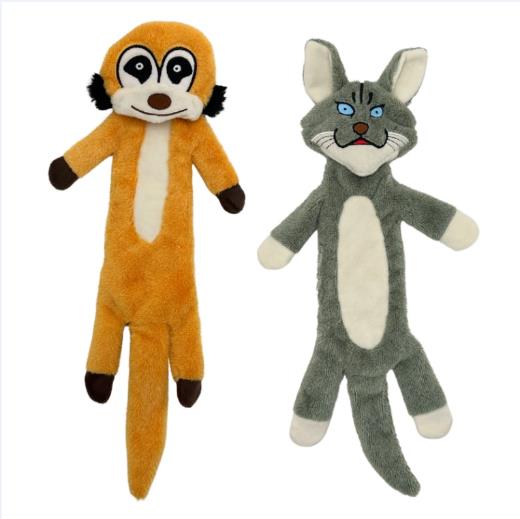
Long flat body
Two panels, edge-bound, with the shape carried by the cut and the weight of the fabric. Nothing inside to escape from a seam.
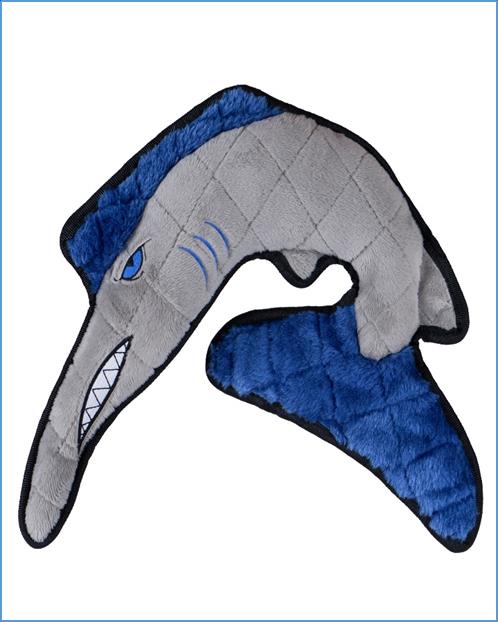
Wide flat body
A broad silhouette with a long tail. On this build the tail is a fabric extension rather than a stuffed appendage, so it survives being shaken.
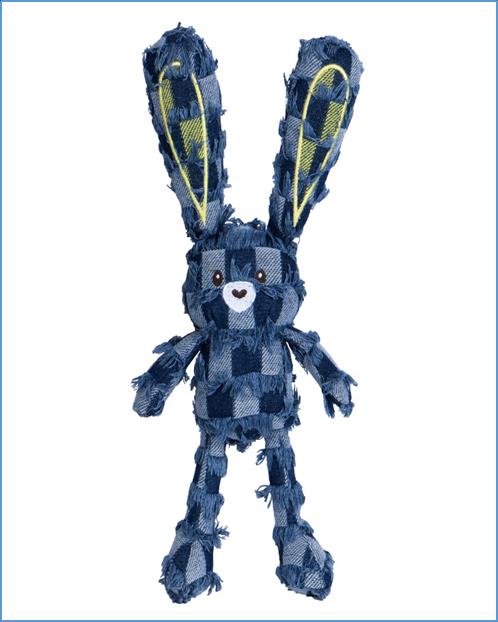
Fringed and frayed
Fringing is cut after stitching and reads as fur without any fill behind it. It is the cheapest way to give a flat body surface interest.
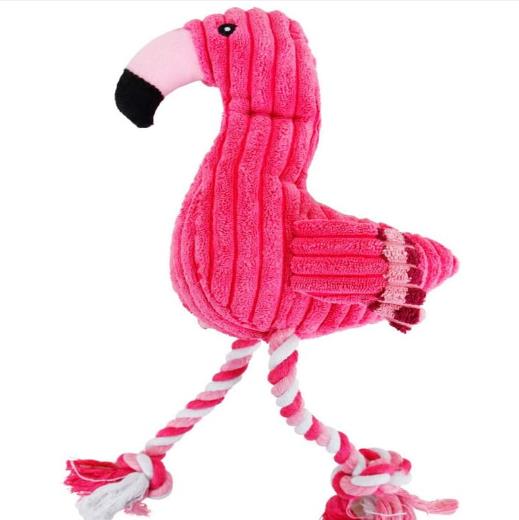
Ribbed and structured
A textured knit gives the body shape without fill. The ribbing does the same job as a light fill would, at a fraction of the weight.
How it is made
Four operations, one of them decisive
A no-stuffing toy skips filling, which removes a stage and a cost. What it adds is a binding and finishing stage, and that is where the quality of the finished unit is decided.
-
STAGE 01
Panel cutting
Front and back panels cut to the shape, plus any crinkle film layer cut slightly inside the seam line. Nesting against the fabric width governs the yield, and the yield is the material cost.
-
STAGE 02
Layer build-up
Where a crinkle layer is specified it goes between the panels before anything is closed. The film is a sealed layer rather than a lining, so it is positioned rather than stitched through.
-
STAGE 03
Stitching and edge binding
Panels are joined and the raw edge is bound. On a no-stuffing toy the binding is the structural element — it is what stops a flat shape from curling or fraying, and it is the first thing a hard-wearing toy needs to get right.
-
STAGE 04
Finishing and function check
Fringing, feature embroidery, label attachment, then a check that the crinkle layer still crackles and the shape still reads. On a crinkle unit the function check is a sound check, the same as on a squeaky toy.
Specification
What decides the cost of a no-stuffing toy
With no fill and no mechanism, the cost of this build sits almost entirely in the fabric, the number of panels and the finishing operations. Each line below says which way it moves.
Specification points
OEM and ODM- Fabric weight
- A flat body holds its shape only if the fabric is heavy enough to. Choosing a lighter fabric to save cost is the single most common reason a no-stuffing toy arrives looking limp.
- Panel count
- Two panels is the minimum. Appliqué features, a contrasting belly or a layered tail each add panels and each adds a stitching operation.
- Edge binding
- Bound, overlocked or turned and topstitched. Binding is the most durable and the most visible, and it sets the look of the whole toy.
- Crinkle layer
- Present or absent, and whether it runs through the whole body or only part of it. A partial layer changes the sound and saves film, but adds a positioning step at assembly.
- Sound device
- A nose squeaker can be added to a no-stuffing build. It is seated at the tip rather than the body, because there is no fill to hold it in position.
- Colourway and print
- Solid, plaid or printed fabric. Print on a flat panel is more forgiving than on a curved filled body, which makes this build a good home for a bold seasonal design.
What buyers ask about this build
Quote a no-stuffing or crinkle construction
Send the shape, the fabric, whether a crinkle layer is wanted, and the packaging format. You will get the applicable minimum order quantity, the sampling date and the compliance file set in the same reply. Related reading: all five dog constructions and the buying guides.