
Seasonal collections
Seasonal dog toys, bought on a dated calendar
Christmas, Halloween and spring assortments, built as dated ranges: the same plush, squeaky and chew constructions as the core catalogue, with seasonal artwork, seasonal packaging and a production window that runs backwards from the retail date. Quoted with the dates that make each season.
The seasonal sequence
Why dated ranges are quoted differently
A seasonal range is not a harder order to make than a core order. It is a harder order to schedule, because every stage has a date attached and a decision that cannot be taken late. The table works through a Christmas range, and the same sequence applies to any dated collection.
| Stage | What has to be decided | What a late decision costs |
|---|---|---|
| Range plan | How many SKUs, which constructions, which sizes, and whether the season reuses core shapes or introduces new ones. | Tooling and pattern work on new shapes has to be done before sampling, so a shape added late compresses every stage behind it. |
| Artwork and brief | The seasonal design, colourways, branding placement and packaging format. | Artwork drives the print plate and the pattern at the same time. Changing it after the first sample usually means a second sample. |
| Sampling | The construction as it will actually be made, including fill, inserts, trim and seam placement. | Revision rounds are the main variable in seasonal development time, which is why the brief is worth more attention than the drawing. |
| Signed sample | The approved unit that governs bulk, plus the specification sheet and the compliance file set. | Nothing moves into bulk before the sample is signed, and the signature is the date the production window starts from. |
| Bulk and packaging | Production run, seasonal header cards, gift presentation, carton counts and shipping marks. | Packaging is a second print job with its own lead time. Approving it after the toy is finished is the most common cause of a missed season. |
| Shipment | Shipping method, destination and the retail date the goods have to be on shelf for. | Dated goods arriving after the season are not late, they are unsellable. This is the one stage where the destination date is worth fixing first. |
We do not publish standard cut-off dates, because a cut-off that works for one destination is wrong for another. Send the retail window and the destination and the sequence above is returned with dates attached to each stage. The buying guides cover how to plan the range side of this in more detail.
Collections
Three seasons, one construction base
A seasonal collection is the core range wearing seasonal artwork, plus whatever new shape the season justifies. Each collection below starts as an overview rather than a separate page, because the construction detail already lives on the family pages.
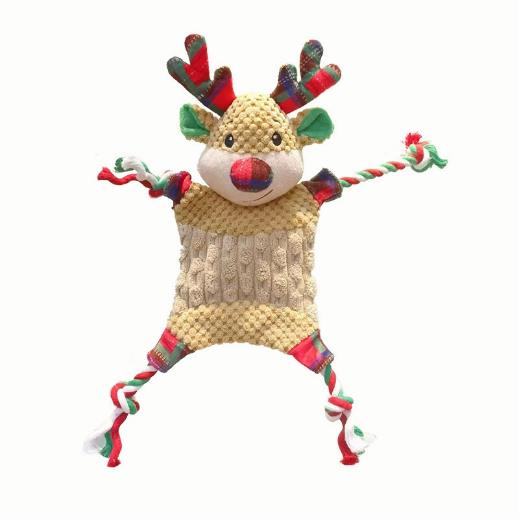
Christmas
The longest seasonal run and the one with the widest range: reindeer, snowmen, Santa and gift shapes across plush, squeaky and no-stuffing builds, plus gift-box presentation and multi-packs. Christmas is also the season where retail buyers ask for the largest single assortment, so it is normally planned first.
New shapes are worth committing to early. A reindeer introduced for the season has tooling or pattern work behind it, and that work starts before sampling rather than during it.
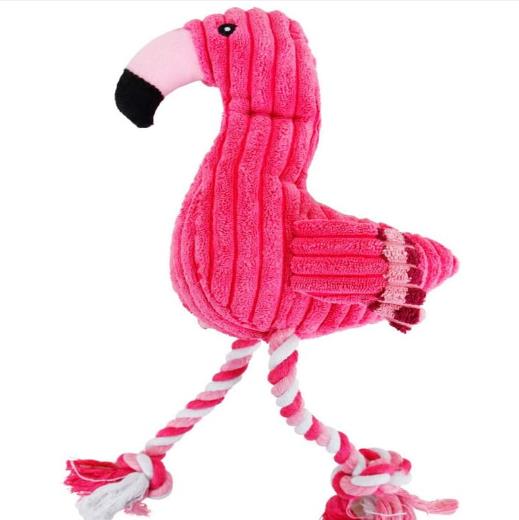
Halloween
A shorter season with a sharper design brief: colour-led rather than shape-led, so most Halloween ranges are existing constructions in a limited palette with seasonal packaging. That makes it the cheapest season to enter and the easiest to get wrong on timing, because the retail window is narrow.
The photograph is a core construction rather than a seasonal unit. Halloween ranges are normally built from shapes already in the range, recoloured — which is exactly why the season is quoted from the core catalogue.
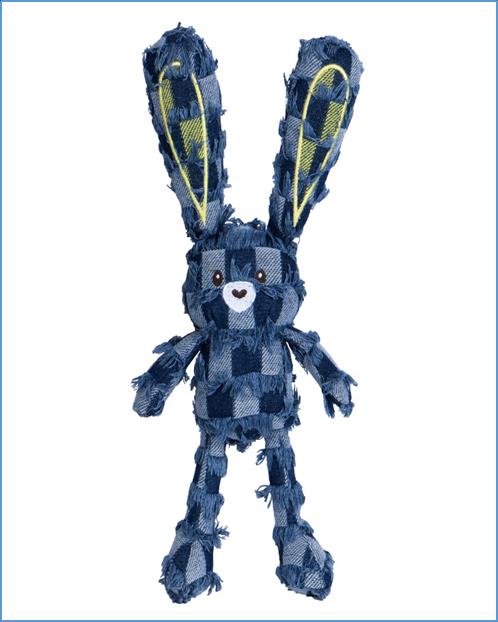
Spring and Easter
Rabbit, chick and egg shapes, usually in a smaller assortment than Christmas and often sold as an impulse line rather than a planned range. Because the shapes are simple and the volumes are lower, spring is a good season for a first dated order.
The photograph shows the plaid fleece construction that spring shapes are commonly cut from, with fringed ends that read as fur and tail detail.
Seasonal packaging
The half of a seasonal range that misses the season
A dated range has two production jobs, not one: the toy and the packaging. They are printed separately, they have separate lead times, and packaging is the one that gets approved late — usually because it is treated as artwork rather than as a manufacturing item.
Header cards and tags
Seasonal artwork on the standard card format, so the range reads as one collection on a peg. Card stock, finish and the hanging hole are specified with the toy, not afterwards.
Gift presentation
Boxes, sleeves and multi-packs, which are the formats Christmas buyers ask for and the ones with the longest lead time. A gift box is a separate supplier and a separate schedule.
Carton marks
Seasonal SKU codes, destination and shipping marks. The carton is what a distribution centre reads, so a wrong mark on dated goods stops the goods moving even when the toy is right.
Where a collection is sold as a multi-pack, the pack is quoted as its own line with its own minimum, because the packing operation is what sets that minimum rather than the toys inside it.
Specification
What a seasonal brief has to state
The fields are the same as for a core range with three additions that only dated orders have. Sending all three in the first message is what turns a seasonal enquiry into a dated quotation.
The retail window
The date the goods have to be on shelf, and the destination. Everything else in the schedule is worked backwards from this, so it is the first field, not the last.
Collection and SKU count
Which season, how many SKUs, and whether the shapes are new or recoloured core constructions. This is the field that decides whether there is tooling work.
Construction mix
How the assortment splits across plush, squeaky, no-stuffing and chew. A seasonal range usually carries a wider mix than a core order of the same size.
Artwork and colourways
The seasonal design and how many colourways it runs in. Colour count is one of the strongest drivers of the minimum on a first dated run.
Packaging format
Header card, gift box, sleeve or multi-pack, with the carton configuration. A dated range should have packaging approved alongside the sample, not after it.
Compliance route
Which reports and certificates the order carries, decided by the destination market and the retail channel. Seasonal goods usually ship into the same channels as core goods and take the same file set.
What buyers ask about dated ranges
Plan a seasonal range against a retail date
Send the season, the retail window and the destination. You will get the production sequence with dates attached, the applicable minimum order quantity for each construction, and the compliance file set — in the same reply. Related reading: plush and squeaky constructions and the buying guides.